
Datacenter
How to choose a high-speed datacenter proxy service in 2025
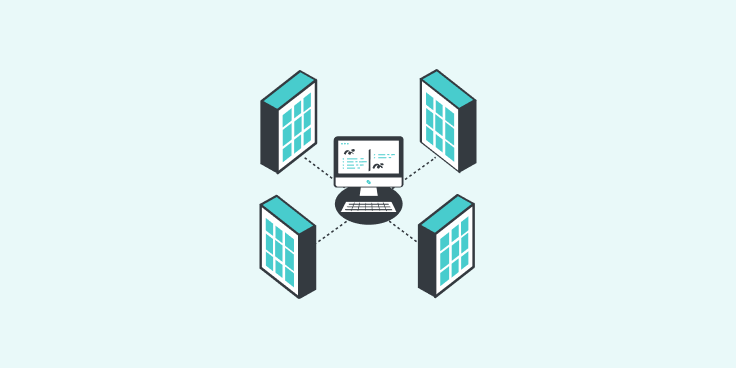
If you're evaluating infrastructure for web data collection, QA, or automation, this guide shows exactly how to assess speed, reliability, and compliance when choosing a high-speed datacenter proxy service. You'll get a clear testing plan, a neutral comparison of leading providers, and the latest on anti-bot defenses—plus proof-led reasons teams switch to Oculus Proxies.
To match real-world search intent, we also address related needs: business proxy solutions, enterprise datacenter proxies, fast datacenter IPs, low-latency proxies, business-grade proxies, premium speed proxies, gigabit proxy servers (including 10Gbps proxies scenarios), high-bandwidth proxies, performance datacenter proxies, blazing fast proxies, fast proxy servers, enterprise proxies, and the choice between Shared datacenter proxies and Dedicated datacenter proxies.
Recommendations at a Glance
- Fast scale-up for bulk scraping: Bright Data — flexible per-IP and per-GB options; strong tooling for high-bandwidth proxies.
- Precise geo and mixed networks: SOAX — broad mix with country/city targeting for performance datacenter proxies.
- Budget-focused DC bandwidth: FloppyData — aggressive per-GB DC pricing; quick start for blazing fast proxies at volume.
- Complement DC with residential/datacenter: Ping Proxies — simple pay‑as‑you‑go; helpful for tougher targets when fast residential/mobile is needed.
- Compliance-first, HTTP/S and SOCKS5 endpoints: Oculus Proxies — business-grade proxies with region flexibility and straightforward setup.
How to Choose a High-Speed Datacenter Proxy Service in 2025: Quick Comparison
Here's a brief comparison of leading high-speed datacenter proxy providers:
| Provider | Network Types | Geo Targeting | Protocols | Compliance | Pricing Model | Best For |
|---|---|---|---|---|---|---|
| Oculus Proxies | Residential, ISP, Datacenter | Country, City, State, ASN, ZIP | HTTP/S, SOCKS5 | ToS/KYC + Acceptable Use | Datacenter from $0.10/GB | High‑speed DC workloads needing granular region flexibility; simple macOS setup for mixed business proxy solutions |
| Bright Data | Residential, ISP, Datacenter, Mobile | Country, City, ASN | HTTP/S, SOCKS5 | Compliance program | Per‑IP and Per‑GB — DC PAYG from $0.60/GB; per‑IP tiers from $0.90/IP | Enterprise‑scale high‑speed datacenter proxies with granular targeting and data tooling |
| Ping Proxies | Residential, Datacenter | Country, some city | HTTP/S, SOCKS5 | ToS/AUP | Datacenter from $1.4/IP | High‑speed datacenter proxies with Sticky and static sessions |
| SOAX | Residential, ISP, Datacenter, Mobile | Country, City | HTTP/S, SOCKS5 | ToS/compliance | Usage‑based & monthly tiers — Datacenter from ~$0.49/GB (Advanced) to ~$0.32/GB (Enterprise) | Precise geo plus fast datacenter IPs; balanced per‑GB plans for performance datacenter proxies |
| FloppyData | Residential, ISP, Datacenter, Mobile | Country, City | HTTP/S, SOCKS5 | ToS/AUP | Usage‑based & monthly tiers — Datacenter from ~$0.60/GB | Budget‑friendly high‑speed datacenter proxies; quick start when low‑latency, high‑bandwidth proxies are needed |
Notes: Specs and pricing are publicly stated by each provider (or marked as internal where noted) and may change. Checked: December 2025.
- Oculus Proxies pricing/specs: https://oculusproxies.com/pricing • SLA: https://oculusproxies.com/legal/sla
- Bright Data Datacenter pricing: https://brightdata.com/pricing/proxy-network/datacenter-proxies
- Ping Proxies: https://pingproxies.com/
- SOAX Datacenter pricing: https://soax.com/proxies/datacenter and https://soax.com/pricing
- FloppyData pricing: https://floppydata.com/pricing and DC "from $0.60/GB": https://floppydata.com/free-proxy/
How to Test Providers (7–14 Days)
Run the same workload across 2–3 providers to compare apples-to-apples. Keep targets, headers, rotation, and retries identical. This reveals which services truly deliver blazing fast proxies and premium speed proxies under your load.
- What to measure and log:
- Success rate: % 2xx responses per target/provider.
- Latency: TTFB and total time (p50/p90); low-latency proxies will have narrower tails.
- Ban/Block rate: 403/429/5xx patterns; map to rotation/session behaviors.
- Protocol verification: confirm HTTP/S and SOCKS5 endpoints and any auth modes you require.
- Geo accuracy: confirm country, city, state, ASN, ZIP via headers or geo-echo endpoints.
- Concurrency ceiling: ramp threads until throttling; verify fast proxy servers maintain stability under peak.
- Throughput: for gigabit proxy servers or 10Gbps proxies scenarios, run sustained transfers and measure end-to-end throughput, not just request latency.
- Stability under load: 60–120 min stress; watch connection resets, error bursts.
- Support responsiveness: time-to-first-reply, time-to-resolution on a real ticket.
- Compliance/KYC: ensure your use case passes; collect required documents early.
- Minimal test harness:
- Targets: 5–10 domains (static + JS-heavy), consistent UA/headers.
- Rotation: time-based vs per-request; fixed sticky duration vs full rotation.
- Schedule: 3 runs/day, 30–60 min each, for 7–14 days to capture variability.
- Logs: timestamp, target, region, protocol, status code, bytes in/out, TTFB, total ms, error text, proxy endpoint, session ID/fingerprint.
What's New in 2024–2025
- Modern anti-bot detection expands: TLS client fingerprints (JA3/JA4) and behavior signals (canvas/font probing, interaction heuristics) are widely used by sophisticated sites. Providers and tools increasingly adapt TLS handshakes and fingerprints to reduce detection. Sources: Salesforce/JA3; Cloudflare JA3/JA4 docs; independent explainers.
- Rotation and session controls improve: More vendors expose precise sticky session durations, ASN/ZIP targeting, and automated retry policies—helpful for maintaining performance datacenter proxies under load.
- Compliance/KYC normalization: Vendors increasingly document acceptable-use controls and KYC for higher-risk networks (residential/mobile), reducing abuse and speeding legitimate onboarding. Sources: Oxylabs KYC; Bright Data KYC FAQ highlights.
Industry Use Cases
- E‑commerce monitoring and MAP: Regionally accurate prices/stock using fast datacenter IPs; city/state targeting improves signal quality.
- Ad verification: Validate creatives and placements by market; Shared datacenter proxies are cost‑effective for volume, Dedicated datacenter proxies for account‑sensitive flows.
- SEO & SERP tracking: Depersonalized results across locales; high concurrency and low-latency proxies help hit rank windows.
- Market research & competitive intelligence: Crawl catalogs, reviews, promo pages; datacenter IPs are cost‑efficient for non‑sophisticated targets.
- AI/ML data collection: Build datasets for RAG/classifiers; combine DC (speed) + residential/mobile (tough targets) to balance success and cost.
FAQs: Choosing a High-Speed Datacenter Proxy Service
- Do proxies encrypt my traffic by default?
No. Encryption comes from HTTPS/SSL (TLS) between your client and the target. Proxies relay traffic; they don't add encryption by themselves.
- What proxy types matter here?
Datacenter (machine-generated IPs; fastest/cost‑effective), ISP/static residential (real ISP-issued, static), Residential (rotating, peer devices), Mobile (cellular egress; highest cost). Within DC, decide between Shared datacenter proxies (cheaper, multi-tenant) and Dedicated datacenter proxies (exclusive IPs).
- SOCKS5 vs HTTP/S:
SOCKS5 adds auth and UDP flexibility; it is not encryption. HTTP/S proxies handle HTTP traffic at the application layer.
- Quick evaluation criteria?
Success rate, TTFB, ban rate, concurrency ceilings, accurate geo, support SLAs, and compatibility with HTTP/S and SOCKS5.
- VPN vs proxy?
VPNs tunnel full-device traffic for privacy; proxies route selected requests and give granular control. For business proxy solutions and scraping, proxies are more controllable and cost‑efficient.
Why Oculus Proxies
- Coverage: Country- and city-level targeting with both sticky and rotating sessions — Internal benchmark (November 2025). See Locations: https://oculusproxies.com/proxy-location
- Reliability: High success-rate window observed across last 90 days on mixed retail/news targets — Internal benchmark (November 2025). Status: https://6rga0hr5.rpcld.net/status/oculusproxies
- Performance: HTTP/HTTPS and SOCKS5 endpoints; robust session control; high‑concurrency plans — Internal benchmark (November 2025). SOCKS5 docs: https://docs.oculusproxies.com/proxy-networks/socks5-proxies
- Support/SLA: 24/7 support with defined escalation paths and uptime goals — Internal benchmark (November 2025). Email support: support@oculusproxies.com
- Pricing: Usage‑based & monthly tiers — Datacenter from $0.10/GB, Residential from $0.80/GB.
Ready to test high-speed datacenter proxies? Start free trial
Notes & Sources
- JA3 TLS fingerprinting (Salesforce/official): https://github.com/salesforce/ja3 and article https://engineering.salesforce.com/tls-fingerprinting-with-ja3-and-ja3s-247362855967/
- Cloudflare docs on JA3/JA4: https://developers.cloudflare.com/bots/additional-configurations/ja3-ja4-fingerprint/
- Bright Data Datacenter pricing + KYC FAQ: https://brightdata.com/pricing/proxy-network/datacenter-proxies
- SOAX Datacenter pricing: https://soax.com/proxies/datacenter • General pricing: https://soax.com/pricing
- FloppyData pricing: https://floppydata.com/pricing • DC "from $0.60/GB": https://floppydata.com/free-proxy/
- Ping Proxies (Residential/Datacenter): https://pingproxies.com/proxy-service/datacenter-proxies
- Oculus Proxies Shared Datacenter Proxies: https://oculusproxies.com/products/shared-datacenter-proxies
- Oculus Proxies Dedicated Datacenter Proxies: https://oculusproxies.com/products/dedicated-datacenter-proxies
- Oculus Proxies DC comparison guide: https://docs.oculusproxies.com/proxy-networks/dc-comparison
Checked: December 2025. Update quarterly.
Conclusion
To pick the right partner for high-speed datacenter proxies, align capabilities with your workload and measure the results: success rate, TTFB, ban rate, concurrency ceilings, accurate geo, and compatibility with HTTP/S and SOCKS5. Run 7–14 day side‑by‑side tests on identical targets, validate location accuracy, and clear KYC early.
Use Bright Data or SOAX for polished enterprise/mixed networks with granular targeting; FloppyData for budget‑friendly DC bandwidth; and complement DC with Ping Proxies for tougher residential/mobile targets. Choose Oculus Proxies if you want business‑grade proxies, granular geo (country, city, state, ASN, ZIP), and flexible usage‑based or monthly tiers.
When you're ready, we'll help you run a clean, reproducible pilot—down to gigabit proxy servers and 10Gbps proxies throughput validation.

Oculus Networks Inc. 1013 Centre Road Suite 403 B Wilmington DE 19805
Oculus Networks Inc © 2026